

Network Mentality
From mountain summits to flood-prone watersheds, scientists are discovering that the future of forecasting depends on closing the gaps between observations.
For decades, environmental monitoring has largely been viewed as an infrastructure challenge. When forecasting uncertainty appears, the typical response has been straightforward: deploy additional weather stations, expand radar coverage, launch more satellites, or develop more sophisticated numerical weather prediction models. Those investments remain critical, but a growing body of research suggests that the next major advancement in environmental intelligence may come from a different direction. The challenge is not simply collecting more data. It is creating better connections between observations, filling the gaps that matter most, and ensuring that information moves seamlessly between local measurements and larger forecasting systems.
Evidence for this shift is emerging from places that could hardly be more different. One sits nearly 7,000 meters above sea level on the summit of Aconcagua in the Andes. The other lies within the flood-prone watersheds of Texas Hill Country. Yet despite their geographic differences, both illustrate the same scientific reality: uncertainty often emerges in the spaces between observations.
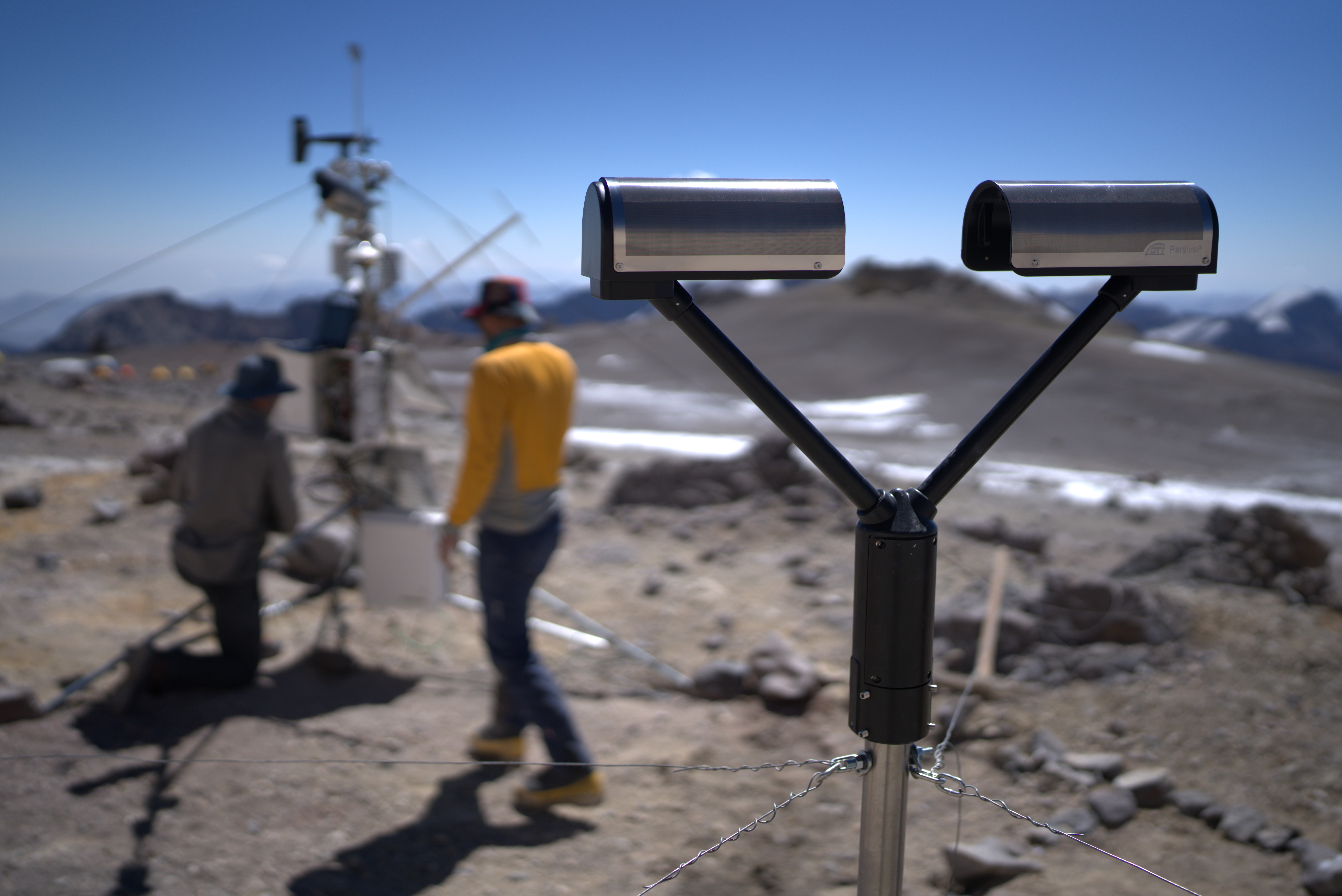
The Wayra project demonstrated this principle by establishing one of the world's highest meteorological observation networks across nearly 4,000 meters of elevation. For the first time, researchers could continuously observe how temperature, humidity, pressure, wind, precipitation, snow accumulation, and solar radiation evolved through a complete mountain profile. The resulting data revealed atmospheric processes that had previously been inferred through models but rarely measured directly. Researchers documented dramatic vertical gradients in temperature and humidity, captured the evolution of major snowfall events across elevation bands, and observed solar irradiance values that occasionally exceeded expected clear-sky conditions due to interactions among snow, ice, and cloud cover. These insights are more than scientific curiosities. They influence understanding of glacier mass balance, seasonal water availability, and the forecasts that communities downstream depend upon.
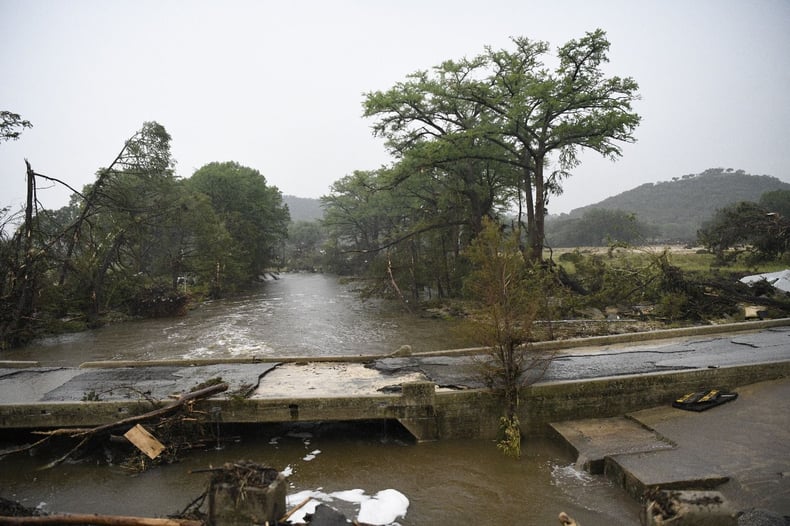
At the same time, recent analysis following catastrophic flooding in Texas Hill Country reinforced a complementary lesson. Researchers found that experimental forecasting approaches capable of resolving atmospheric and hydrologic processes at finer scales showed promising improvements in predicting extreme flood conditions. The implications extend beyond one watershed. As forecasting systems become more precise, the value of localized environmental observations grows alongside them. Better models require better inputs, and better inputs depend upon observations collected where environmental processes actually occur rather than where monitoring infrastructure happens to exist.
Together, these projects point toward a powerful and surprisingly attainable idea: the future of forecasting may depend less on a handful of extraordinary monitoring efforts and more on cultivating a network mentality.
The Democratization of Environmental Intelligence
The phrase "network of networks" often evokes images of major international scientific campaigns, high-altitude expeditions, or national observing systems supported by significant research budgets. The reality is far more accessible.
A river authority monitoring streamflow through a critical watershed contributes environmental intelligence. A transportation department measuring road weather conditions contributes environmental intelligence. A utility collecting precipitation and runoff information, a municipality monitoring flash-flood-prone areas, a university maintaining a climate station, or a solar developer measuring irradiance variability all contribute environmental intelligence. Individually, each observation serves a local purpose. Collectively, those observations begin to reveal broader environmental patterns that no single station could capture alone.
This is where the concept of a network of networks becomes transformative. The value no longer resides exclusively within a sensor or even a monitoring site. Instead, value emerges from the relationships among observations. A rainfall measurement acquires additional meaning when connected to upstream watershed conditions. Snowpack observations become more useful when understood alongside temperature, radiation, and runoff data. Localized flood monitoring gains predictive power when integrated into larger meteorological and hydrologic frameworks.
In other words, a weather station is no longer simply a data collection device. It becomes a node in a larger system of environmental understanding.
Why El Niño Makes This More Important Than Ever
The current El Niño cycle provides a compelling example of how these concepts intersect.
Seasonal outlooks can signal heightened risk for flooding in one region, drought in another, altered snowfall patterns elsewhere, and changing cloud cover that influences renewable energy generation. Yet decision-makers rarely act on continental-scale outlooks alone. Water managers need to know whether reservoirs are likely to refill. Emergency planners need to understand how a specific watershed may respond during an extreme rainfall event. Transportation agencies need to anticipate impacts on road networks. Utility operators must assess how changing environmental conditions affect infrastructure reliability.
Those decisions cannot be made with global climate indicators alone.
Large-scale climate phenomena establish the possibility of risk, but local observations determine how that risk manifests in practice. The relationship is not additive; it is multiplicative. An El Niño forecast gains value when paired with trusted, site-specific environmental measurements. Likewise, local observations become more powerful when interpreted through the lens of larger climate drivers.
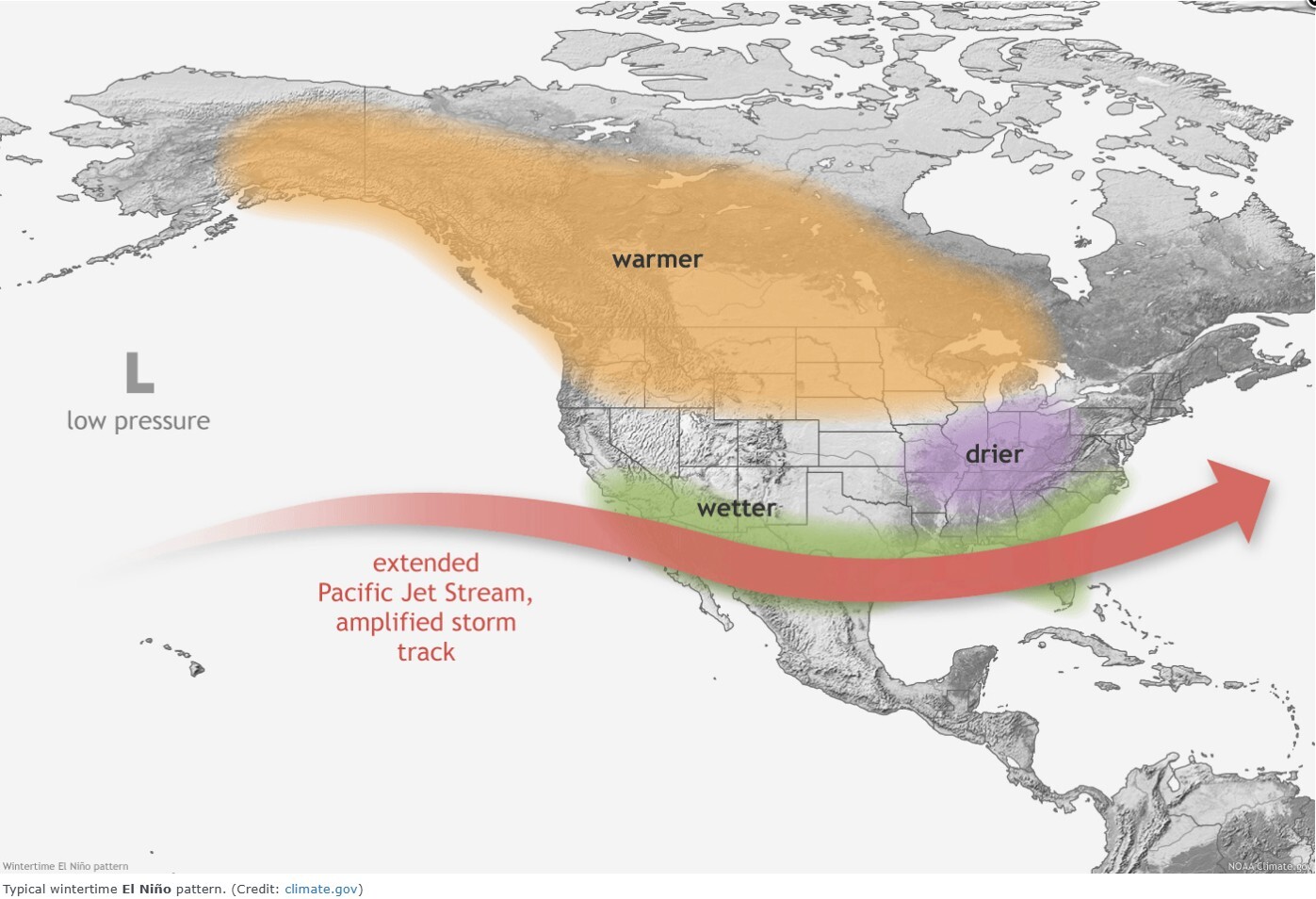
This interplay between global climate variability and local environmental intelligence represents one of the most important frontiers in forecasting today. Projects like Wayra provide remarkable examples of what can be achieved when critical observation gaps are closed. At the same time, the lessons emerging from Texas Hill Country demonstrate that even hyper-local monitoring networks can meaningfully improve preparedness when they are integrated into broader forecasting frameworks.
More Than Resilience. Confidence.
Perhaps the most encouraging aspect of this evolution is that it is achievable. The lesson from Aconcagua is not that every community requires a weather station on a 7,000-meter mountain. Rather, it is that every community has the ability to contribute to a larger picture through observations collected in the environments they know best.
The future of environmental intelligence will be built through connected observations, shared knowledge, and a collective commitment to reducing blind spots. Some of those observations will originate from globally significant research programs. Others will come from municipally managed flood networks, transportation corridors, utility monitoring systems, and university research stations. What matters is not where the data originates, but how effectively it is connected, shared, and transformed into insight.
For Ott and Kipp & Zonen, this vision extends beyond instrumentation. It reflects a belief that confidence emerges when trusted measurements are transformed into actionable understanding. Whether the challenge is forecasting the impacts of El Niño, improving flood preparedness, managing water resources, or supporting long-term climate adaptation, the objective remains the same: helping decision-makers move beyond uncertainty.
Because when the next flood develops, the next drought emerges, or the next climate anomaly reshapes environmental conditions, confidence will not come from a single model, a single forecast, or a single observation point.
It will come from a network of networks, working together to reveal what none could see alone.
Article
In Episode 20 of OTT Cast, we welcome Daryl Ritchison to share his expertise on mesoscale ...
Article
The evolution of cellular technology has brought about various standards and categories; each ...
Article
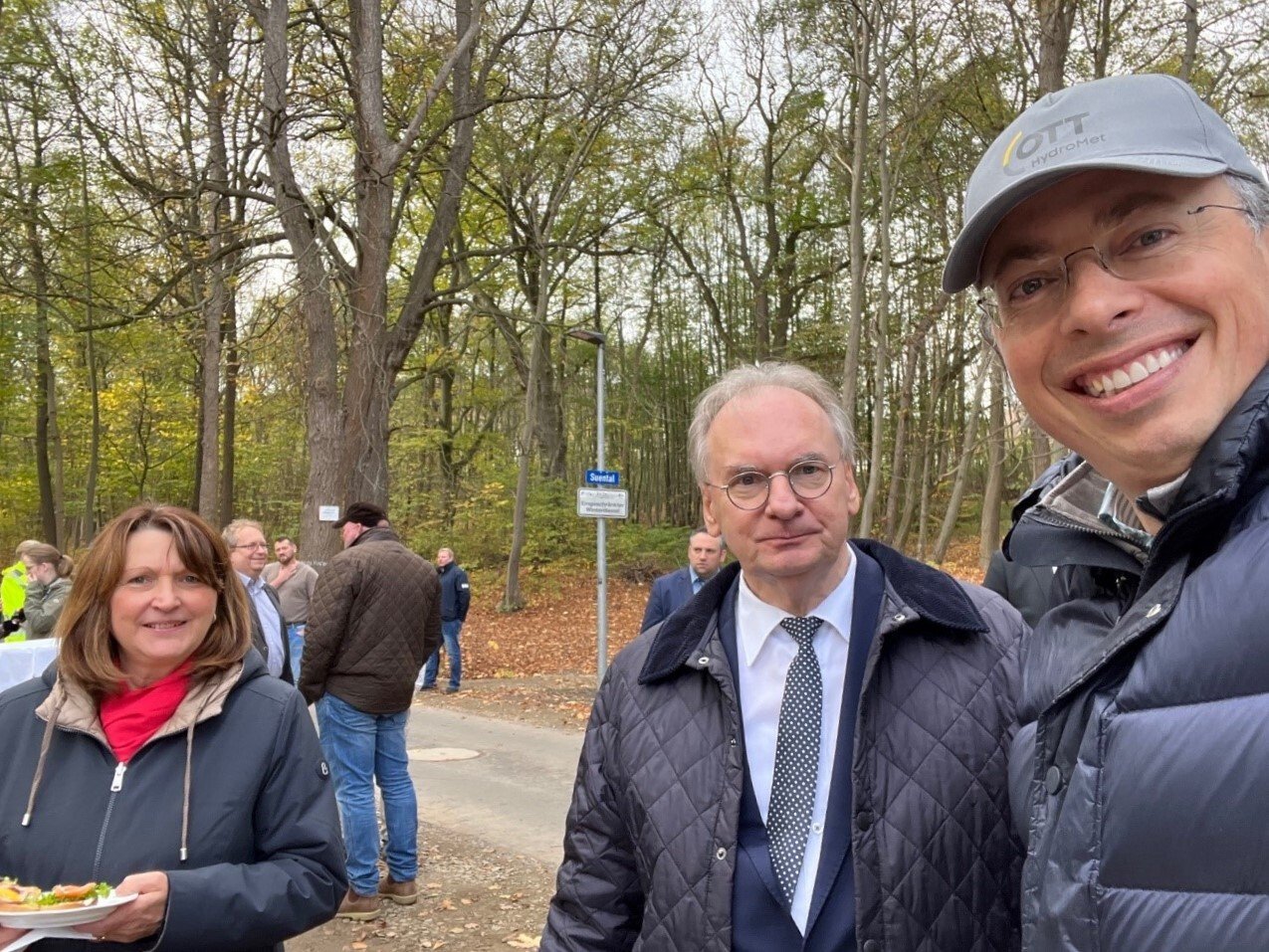
On a recent site visit, Danail Kuzarow, Sales Director at Ott HydroMet, joined Reiner Haseloff, ...
Article
The University of Freiburg is one of the top universities in Germany and has been recognized for ...
Article
The Great Fen, a vast landscape located in Cambridgeshire, England, and home to two National Nature ...