


Confidence Starts Close to Home
For more than 150 years, Ott has helped organizations observe water with precision. Today, that legacy has a broader purpose: turning trusted measurements of water quantity and quality into environmental intelligence that remains useful across sites, watersheds, models, and time.
The value is not the sensor. It is the observation that keeps working.
Lifecycle research exposes the weakness of treating installation as the finish line. Monitoring projects can meet procurement targets while operations and maintenance, calibration, communications, consumables, skills, and eventual replacement remain underfunded. Hardware delivery and service performance are not the same achievement. The better measure is continuity: is the observation still trustworthy and flowing when extreme conditions arrive, budgets tighten, or the original project closes?
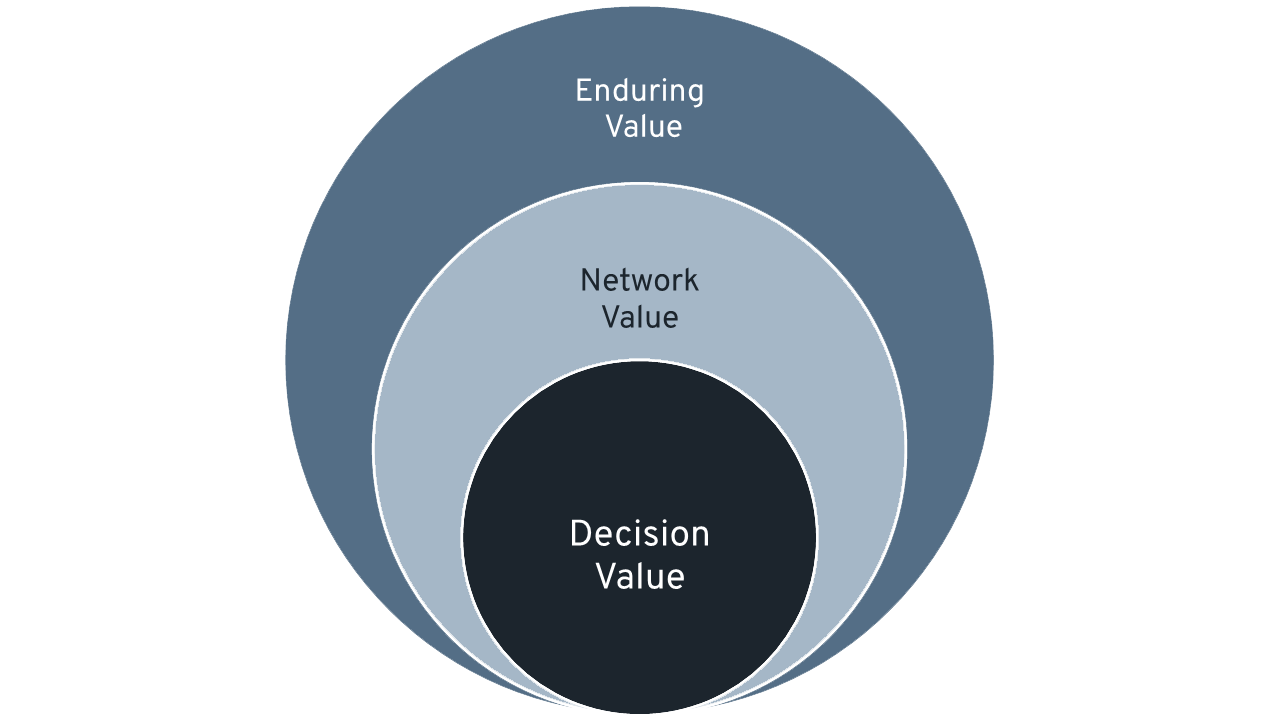
What is the Three Rings of Value framework? The rings are not only geographic. They are also operational and temporal. Value compounds as an observation serves an immediate decision, strengthens connected intelligence, and remains dependable over time.T
RING ONE: DECISION VALUE
A point becomes useful when it represents the decision
A single measurement can identify a condition. A deliberately designed set of measurements can reveal its extent, verify that it is real, and show where action will have the greatest effect. Density is therefore not a simple count of instruments. It is the amount of spatial and operational uncertainty a network can remove.
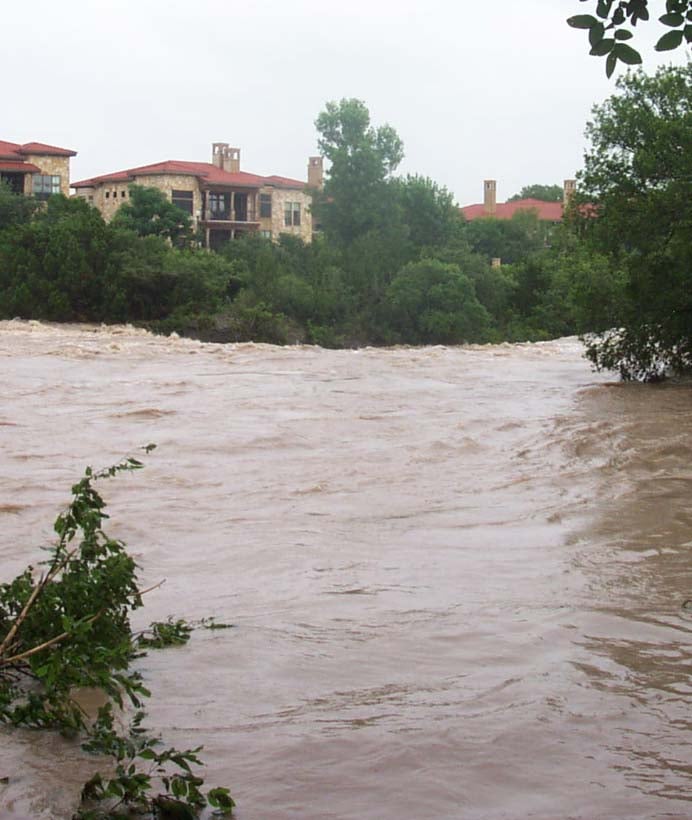
Flood monitoring makes this clear. One water-level reading above a threshold may indicate a rising flood, a blocked intake, sensor drift, or a highly localized event. Several stations observed together across a watershed can show whether levels are rising in sequence, how quickly the crest is moving, and which communities or assets face the greatest risk. The network turns an isolated alert into a decision map.
Water quality follows the same logic. A single measurement can identify a change at one point, but upstream, downstream, and tributary observations help distinguish a localized discharge from a broader watershed pattern. Connected measurements of turbidity, temperature, conductivity, dissolved oxygen, nutrients, or other parameters reveal where conditions began, how they are moving, and where intervention should be focused.
The relevant cost is not only the price of another measurement point. It is the cost of the blind spot it removes.
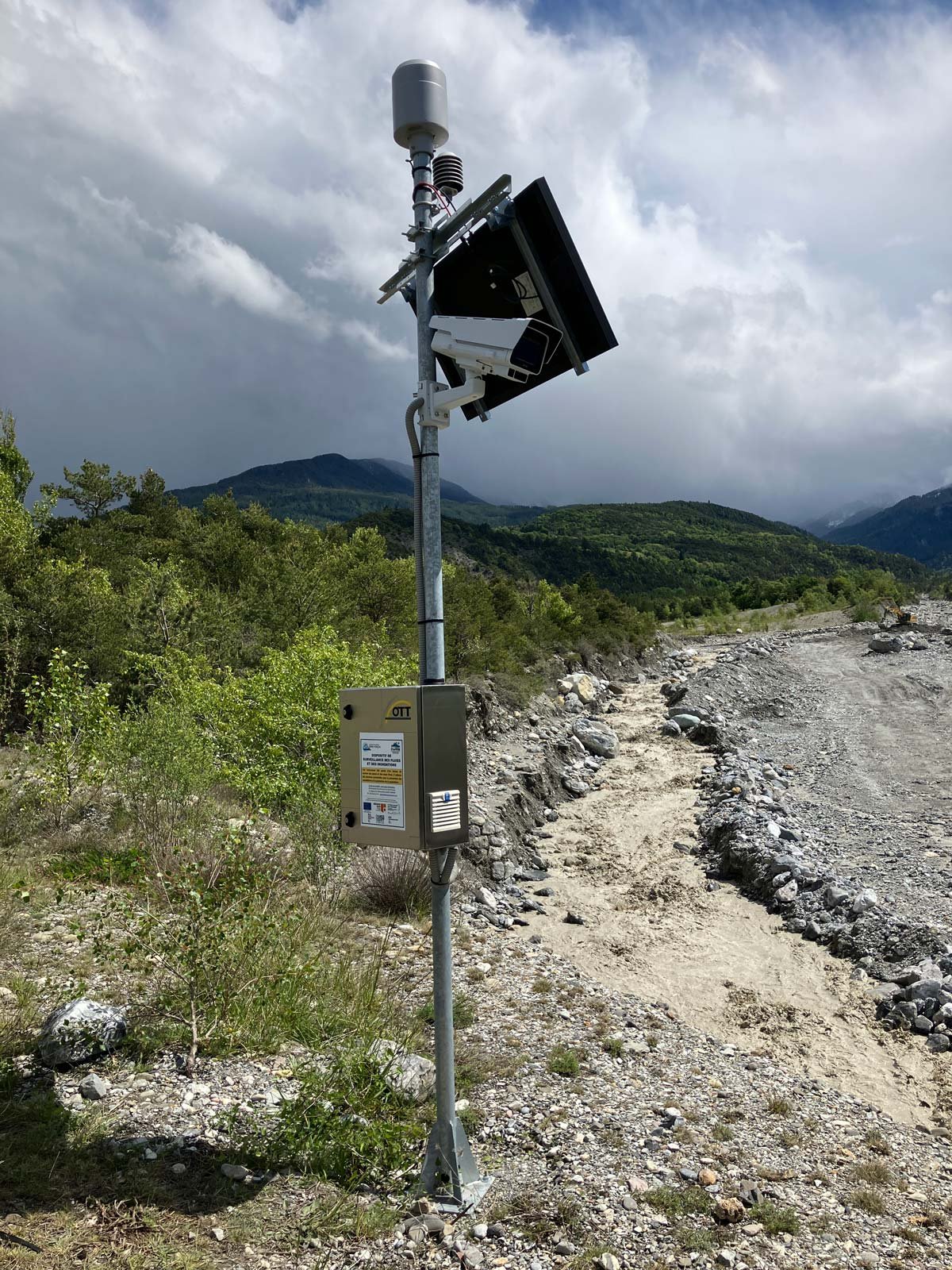
For Ott, this is where precision becomes practical. Decision-grade monitoring combines fit-for-purpose instruments, purposeful siting, traceable calibration, resilient telemetry, and enough corroboration to distinguish a real pattern from a questionable reading.
RING TWO: NETWORK VALUE
Connected observations reveal what no point can see alone
Water does not respect a property line or jurisdictional boundary. The rainfall that will raise a local stream may be falling upstream. The flood crest approaching an intake may already be visible to another agency. A water-quality change affecting a reservoir may begin in a tributary outside the operator’s service area. When observations connect across a watershed, each participant gains context and lead time beyond what it could create alone.
Texas Hill Country illustrates the decision value of density under rapidly changing conditions. In fast-response watersheds, finer spatial and temporal resolution can help forecasters and emergency managers interpret localized rainfall and stream response. The principle extends to any basin: more connected observations provide a richer picture of how conditions propagate across terrain and through the water system.
Regional sharing compounds the return because it is reciprocal. When a river authority, emergency-management office, water utility, watershed district, research institution, and transportation agency contribute what they already measure into a shared view, each participant gains more context than it could afford to build independently. A handful of local stations can unlock visibility across an entire basin.
The deeper lesson is not simply that larger networks collect more data. They make interpretation more reliable. Shared methods, comparable observations, station metadata, and dependable data transmission allow knowledge to move between institutions instead of remaining trapped at the point of collection.
This ring also sharpens the role of data architecture. A sensor that cannot consistently transmit, describe, or integrate its observation contributes less network value than its measurement quality alone suggests. Metadata, open interfaces, consistent formats, communications resilience, and quality controls are part of the observation system, not accessories to it.
RING THREE: ENDURING VALUE
The observation must survive the project that installed it
The third ring is where the framework emphasizes how local observations strengthen regional and national models. That remains essential, but it is not enough. An observation creates long-term value only if the infrastructure, service model, skills, and financing required to sustain it are designed from the beginning.
Lifecycle evidence from environmental-monitoring projects shows a recurring pattern: equipment is purchased, installed, and briefly improves services; maintenance then lapses, transmission weakens, calibration falls behind, consumables become unavailable, and replacement funding is absent. The network may still exist on paper while the observation service has degraded.
This leads to a stronger principle for Three Rings of Value: success should move from stations installed to observations delivered. The enduring ring asks whether data remain complete, traceable, transmitted, standards-compatible, and available after the launch moment has passed.
For Ott the stronger proposition is observation continuity: a multi-year arrangement that can combine instruments, commissioning, preventive maintenance, calibration, remote diagnostics, connectivity verification, spare-parts access, consumables, defined fault response, lifecycle assessment, and planned replacement. You are not not buying possession of a box. You are securing dependable observation capability.
Installation creates capacity. Sustained observation creates value.
This long-term view strengthens the other two rings. A local operator cannot act confidently on drifting or unavailable data. A watershed network cannot create shared intelligence from silent stations. Forecasting, hydrological models, and long-term water assessments cannot learn from observations that are inconsistent, undocumented, or absent when extreme conditions arrive.
What the WMO evidence adds
The World Meteorological Organization’s global water reporting reinforces the same structure. Local observations support site operations, basin and regional planning, national assessment, and global understanding at the same time. As more countries and stations contribute, the shared picture becomes more complete and more useful.
The associated leadership message adds a necessary condition: global assessment depends on sustained cooperation. Sustained is the critical word. Sharing is not a one-time transfer. It requires institutions, standards, operational continuity, and long-term stewardship. The collective picture is only as dependable as the observations that continue to enter it.
For Ott, this connects water monitoring directly to the five-chapter story. Trusted measurements of precipitation, water level, discharge, groundwater, sediment, and water quality support immediate management while strengthening flood forecasting, drought assessment, watershed planning, scientific understanding, and national and global reporting. Advanced analytics do not reduce the need for ground truth. They increase the value of reliable, well-documented observations.
One observation. Three returns.
The first return is immediate: better decisions at the station, asset, utility, or vulnerable community. The second is connected: richer watershed context, earlier warning, stronger interpretation, and shared intelligence across a network. The third is enduring: observations that continue to strengthen models, standards, scientific understanding, and future decisions because the system was built to last.
That is the practical expression of Ott’s brand story. Observe what matters. Build confidence from trusted evidence. Connect measurements into intelligence. Multiply the value of every observation. Contribute dependable water intelligence to something larger.